10 DAYS IN A MADHOUSE BANNER

THE MARTIAN BANNER

THE MARTIAN BANNER
ADVERTISEMENT

BROOKLYN BANNER

BROOKLYN BANNER
ADVERTISEMENT

Sunday, January 17, 2016

International Women’s Day: the 10 best feminists


With International Women's Day approaching March 8th, I found this article from last year that stood out.


International Women’s Day: the 10 best feminists

On Sunday 8 March, it’s International Women’s Day. To celebrate, Helen Lewis pays tribute to 10 inspirational feminists
Have we missed someone from the list? Leave your suggestion in the comments below and it could feature in the alternative list next week

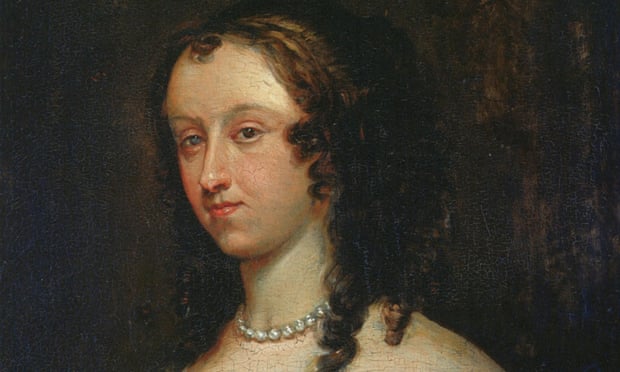
Aphra Behn
Portrait of Aphra Behn 1670
Pinterest
 Portrait of Aphra Behn, 1670. Photograph: Oxford University
READ  STORY HERE

Barrier Breaking Story by Nellie Bly Captured for the Big Screen

Barrier Breaking Story by Nellie Bly Captured for the Big Screen

January 15
14:472016

Caroline Barry plays Nellie Bly in the historical biopic based on Ms. Bly’s book, 10 DAYS IN A MADHOUSE.
Nellie Bly, the risk-taking investigative journalist working under Joseph Pulitzer, opened the gates of opportunity for women in journalism. Her audacious story is being retold in the upcoming film, 10 Days in a Madhouse starring Caroline Barry as Nellie Bly.
Daring journalist Nellie Bly opened the doors for women in the journalism field. She used her very first assignment for The World to show how audacious she was, risking her life for the sake of obtaining the information she needed. This story exposed the practitioners at Blackwell’s Island Insane Asylum as portrayed in the upcoming film, 10 Days in a Madhouse, starring Caroline Barry, Christopher Lambert (Highlander, Mortal Kombat), Kelly Le Brock (Weird Science, The Woman in Red), Julia Chantrey (Mama, Mean Girls) and Russian celebrity actress Alexandra Callas.
The film was released first in New York City at AMC Empire 25 on November 11, 2015, and in select theaters nationwide on November 20. The movie is gaining ground as it continues to expand into theaters across the US.
Critics have raved about the movie, saying “Stunning!” – New York Times, “Must See” – Ms. Magazines, “Awesome, Incredible” – Popcorn Talk Network, “Demands To Be Watched!” Bust Magazine and “A delicate balance between a character study and an ensemble piece,” said ScreenPicks.
Nellie Bly pretended to be insane in order to be admitted into the asylum and experience the mistreatment of the female patients. Her exposé showed the world that women could write about things other than fashion and gossip. Her efforts also put the power to expose female mistreatment into another woman’s hands, tearing down the common misconception that women need men to save them. 
Bly wrote a book on her experience in the asylum, where she wrote, “The insane asylum on Blackwell’s Island is a human rat-trap. It is easy to get in, but once there it is impossible to get out.” Her experience not only showed the mistreatment of women by doctors and nurses, but also the vicious cycle that patients endure, where their condition never improves, but actually gets worse. 
Nellie Bly’s bravery, innovative tactics, and dedication paved the way for female journalists and opened the eyes of many to show that women are strong, and capable of knowing about more than fashion, homemaking, or gossip. Bly’s story is a prime example of a brave, dedicated, and strong woman. Her influence has made huge advancements in our fight for equality and human rights. Her courage is depicted in the accurate film adaptation of her book, 10 Days In A Madhouse by acclaimed director Timothy Hines. It is one of this fall’s must see movies.
10 Days in a Madhouse opened so late in the season the distributors and filmakkers decided to withdraw from the 88th Academy Awards and instead pur the film’s hat in the ring for the 89th Academy Awards to allow the film enough time for proper exposure to be fairly up for consideration. “We looked at the possibility of 2016 Oscar nomination and we determined that if we competed now, we would just land on the dancefloor as the song was ending,” says 10 Days director Timothy Hines. ARTICLE HERE.

Documentary tells the story of women’s suffrage in Britain

Documentary tells the story of women’s suffrage in Britain


Print
Font Size:
Default font size
Larger font size
Posted: Sunday, January 17, 2016 8:00 am
  • rclark

The Story of Women and Power
Back in 1974, Masterpiece Theatre telecast a dramatization of the struggle in England for women’s suffrage titled “Shoulder to Shoulder.” Now Athena has a three-part series that goes over the same material, but it starts centuries earlier. “The Story of Women and Power” is narrated, sometimes a little too passionately, by historian Amanda Vickery.

It is all quite fascinating and even the most devoted misogynist should sicken at the examples of how half the British population suffered under the male domination of husband, government and church. For example, did you know “rule of thumb” refers to the law that kept husbands from beating their wives with a rod thicker than a thumb?
Actually the dramatization of 1974 was much more impressive, because the actions spoke for themselves. In this newer program, being told about it, no matter how bitterly, and seeing newspaper sketches of (say) women prisoners being force-fed is less personal. Notice that a film is about to be released about the British suffrage movement with Meryl Streep as Emmeline Parkhurst, which is doubtless the inspiration for the release of this 2015 documentary.
But the older series and “Women and Power” are — and the upcoming film doubtless will be — worth watching.
Danny Kaye Legends
I remember with some fondness “The Danny Kaye Show” from long ago and still remember his James Blond spoof, but I do not remember Harvey Korman being second banana. Now having seen “Danny Kaye Legends” on two MVD DVDs, I realize how uneven the show was. Well, at least the six shows featured in this set are like that: two from 1964 in black and white, with one from 1965 and three from 1967 in color.
The format of each show is rigid: a song by Kaye, a sketch, a song by a guest star, a sketch, another musical number, a sketch and a finale. Among the guest actors, Lucille Ball deftly handles a sketch with Kaye in which each plays several parts, with endless costume changes. Imogene Coca is utterly wasted, while Liberace gets good laughs. But when George Burns appears in the last show, even Kaye takes a back seat to the vaudeville master and his cigar.
The singers are typical of the ’60s — the Righteous Brothers, Vikki Carr and Tony Bennett — and the dancers are quite good. So let the young see what variety shows were once like and let the old-timers like me recall when comedy did not rely on obscenities.

CAROL :: MOVIES :: REVIEW :: Chicago Tribune

'Carol' review: Blanchett, Mara excel in Todd Haynes' exquisite adaptation


By now, the critical reception for director Todd Haynes' "Carol" has built a fortress of prestige around the film itself, much as the title character played by Cate Blanchettgoes through her life protected by just the right clothes and makeup, a lacquered, tightly put-together look ever-so-slightly subverting the image of the quintessential wife and mother of her time and station.
On the fortress wall there are signs declaring this adaptation of the Patricia Highsmith novel "The Price of Salt" an important love story, a shattering and beautiful experience, featuring Oscar-worthy performances from Blanchett and Rooney Mara, etc. This is awards season, after all. The Weinstein Co. is keen to position "Carol" as a player.
In fact, this excellent film works the way Blanchett's characterization of Carol works: It's meticulous about appearances, while fully aware that appearances can deceive. The movie's emotions are not flagrant or the fulminating sort. With a few minor exceptions (we'll get to those later), practically every decision in the writing, casting, direction and editing of "Carol" was the right one. Like Highsmith's remarkable novel (the rare lesbian love story of its time with an optimistic coda), it neither unduly ennobles its key characters nor confines them to butch/femme sexual archetypes. It's about two people in a highly fraught, highly charged situation, and it's one of the best films of 2015.
Screenwriter Phyllis Nagy's masterstroke was simple. In the novel, the wonder-struck object of Carol's affection was an aspiring scenic designer. In the film the character, Therese Belivet, is instead a talented photographer, quietly developing her craft on the side, watching other lives while her own remains a blank only partly filled by a pleasant but bland boyfriend (Jake Lacy).

By day, Therese works as a Manhattan department store clerk and isn't much good at it. "Carol" opens around Christmastime. At the toy counter one day, wearing the obligatory elf hat, she spies a customer eyeing her across a crowded floor, just as the song from "South Pacific" described it. Seconds later, the customer is standing inches in front of Therese, and Carol inquires about a gift for her daughter. The connection is made, the train set is purchased and Carol leaves her elegant gloves behind, perhaps by accident, perhaps not.

Carol lives a life of comfort that fits her like a straitjacket. Her husband (Kyle Chandler) knows of his wife's bisexual past. (Sarah Paulson plays Carol's best friend and ex-lover.) The husband, Harge, knows the marriage is twisting in the wind. Therese, 19 in Highsmith's novel and a bit older in the film, is a woman waiting for something to happen. Carol is that something. "Flung out of space" is how Carol describes the "strange" girl now a part of her life. The relationship flowers on a road trip west, shadowed perpetually by the knowledge that Carol's custody of her daughter hangs in the balance of this forbidden love.
Daring for the time, Highsmith's novel nonetheless kept a lid on the most intimate aspects of that love. Haynes' film removes that lid partway, so that when they do get together, the encounter is discreet yet sexually frank enough to bridge the story's era as well as a 21st-century retelling of that story. Like the film "Brooklyn," likewise concerning a recessive-seeming female protagonist working in early '50s New York City retail, "Carol" evokes the past on a modest but extremely crafty production budget. The film was shot entirely in and around Cincinnati, mostly using existing (not built) locales. Production designer Judy Becker and top-flight costume designer Sandy Powell refer visually to the period photographs of Saul Leiter, Ruth Orkin, Vivian Maier and others.


The real ace, however, is cinematographer Ed Lachman, who shot "Carol" on Super 16 millimeter film. The colors are slightly muted, so that when a highly saturated element hits the screen (Carol's orange-red nails, for example), it's noticed, and it means something extra. Composer Carter Burwell's quietly insistent music urges on the story in a style recalling Philip Glass. (He's having a great year; his music for "Anomalisa" is even better.)
Haynes' meticulous eye and steady hand allow the performances to dominate. Since seeing the film in May at the Cannes Film Festival and in a second viewing more recently, I've wondered if everything Blanchett does is scaled correctly. Some moments feel a little big, in an outsize theatrical way.

10 DAYS IN A MADHOUSE :: MOVIES :: REVIEWS :: MS Magazine

Great review of a great movie. I have written my now review of this movie and will post it shortly.

Fearless Feminist Reporter Nellie Bly Hits the Big Screen

Fearless Feminist Reporter Nellie Bly Hits the Big Screen

10-DAYS-ONE-SHEET4webModern-day news consumers have long forgotten about 19th-century reporter Nellie Bly, despite the fact that she was the most impressive journalist of her time. Feminist, adventurer and ultimate risk-taker, she traveled around the world in 72 days, and pushed her way to the top of the male-dominated news industry.
But she did her most impressive work in 1887 when, at just 23 years old, she pretended to be insane for an undercover report on the conditions at a women’s mental asylum on Blackwell’s Island in New York City. She spent 10 grueling and horrifying days in the institution but never regretted it, because her expose for Joseph Pulitzer’s New York World would shake the nation to its core. Thanks to her, the asylum was later demolished.
I have long thought that Nellie Bly’s life story would be perfect for the big screen. You can’t get much more daring and badass than Bly. Now finally, someone else agrees! A new film called 10 Days in a Madhouse tells the incredible story of Bly’s chilling undercover investigation.
Written and directed by Timothy Hines, I can honestly say this movie is a must-see. Nellie Bly’s heroism and courage truly come to life on the screen, thanks to the work of talented up-and-coming actor Caroline Barry. Barry is instantly magnetic as Bly, and it’s hard not to root for and fall in love with her character as the story progresses.
Hines also does a great job showing just how grotesque and abusive the conditions really were at Blackwell’s Island Insane Asylum. In the film, Bly encounters creepy and uncaring doctors, sadistic nurses and several incarcerated women who are clearly not insane and should never have been sent to the asylum in the first place. Several are locked up for reasons that would make feminists rage, such as catching their husband having an affair, just being poor, or not being able to speak English well enough to plead their case.
I say incarcerated because, as the film shows, the asylum is truly a prison rather than a center for palliative care. Bly and her fellow “patients” must endure freezing cold baths, threadbare and sullied gowns, disgusting living conditions, stale food and beatings from the institution’s support staff. They are not allowed to read because it might stir their “fevered” emotions and are forced to drink “medicinal” concoctions of morphine at night.
The doctors refuse to allow the women to prove whether or not they really are insane, and easily dehumanize their wards. In one gut-wrenching scene, Bly forces herself to play an old piano in the asylum to drown out the cries of a patient being raped by a doctor. She also witnesses the murder of one of her friends at the hands of superintendent E.C. Dent, who takes no issue with treating the women as guinea pigs for his “scientific” work. Bly is very nearly killed by him too, until her release is secured in the nick of time.
When she finally does escape the asylum, Bly can’t remember how long she spent there. To the viewer, it seems like months have passed. This is not a criticism against the film; it is a compelling watch and Hines keeps the pacing flowing well. But it certainly is a mind-boggling realization that Bly witnessed and experienced all this brutality in little more than a week.
WWFacebook
The script is based on Bly’s reporting and book about her experience, and the dialogue appears to be drawn from Bly’s writings. Unfortunately, this has the unintended consequence of sounding somewhat awkward and stiff to the contemporary moviegoer.
That said, all of the asylum patients are well played, most particularly by actors Julia Chantrey, Natalia Davidenko and Jessa Campbell. Christopher Lambert is strong as the superintendent, but his character comes off as largely one-dimensional, as do the tyrannical nurses. The film also misses a few opportunities to up the tension. For instance, I had hoped for a more cathartic climax when Bly confronts Dr. Dent after he has killed her friend.
However, these shortcomings do not detract from the overall awesomeness of the film, READ WHOLE REVIEW

Jada Pinkett Smith condemns Academy Awards for lack of diversity among nominees

There is no excuse for the lack of diversity amongst nominees...

Jada Pinkett Smith condemns Academy Awards for lack of diversity among nominees


NEW YORK DAILY NEWS
 
Sunday, January 17, 2016, 11:58 AM
  • A
  •  
  • A
  •  
  • A

SHARE THIS URL


Jada Pinkett-Smith Debates Boycotting the Oscars Due To Lack of Diversity in Nominations
Entertainment Tonight
She's certainly not thanking the Academy.
Actress Jada Pinkett Smith slammed the Oscars selection committee for only nominating white actors for awards at next month's highly anticipated show — and even questioned whether actors of color should boycott the prestigious ceremony altogether. "At the Oscars, people of color are always welcomed to give out awards, even entertain, but we are rarely recognized for our artistic accomplishments," she wrote on Facebook and Twitter.
"Should people of color refrain from participating all together?" she continued. "People can only treat us in the way in which we allow. With much respect in the midst of deep disappointment, J."
Pinkett Smith was one of many people outraged by the lack of diversity among this year's nominees — especially considering this is the second consecutive year that only white actors were nominated for an Oscar.
One of the most notable snubs in this year's show is Pinkett Smith's husband, Will Smith, who dazzled in his dramatic portrayal of Dr. Bennet Omalu in 2015's harrowing NFL medical tell-all, "Concussion."